
Gratitude isn’t something we can teach with a single lesson or worksheet. It’s something we grow — through rhythm, repetition, and relationship. In early childhood, that growth often begins in the small, joyful moments that adults share with children during play. When we play with children, we do more than entertain or instruct; we open space for connection. And it’s within those connections that gratitude naturally blooms. Gratitude isn’t just saying “thank you.” It’s noticing — noticing the beauty of a child’s giggle, the creativity in a block tower, or the kindness in a shared crayon. These simple, happy acts are the seeds of grateful hearts.
Gratitude Begins with Noticing
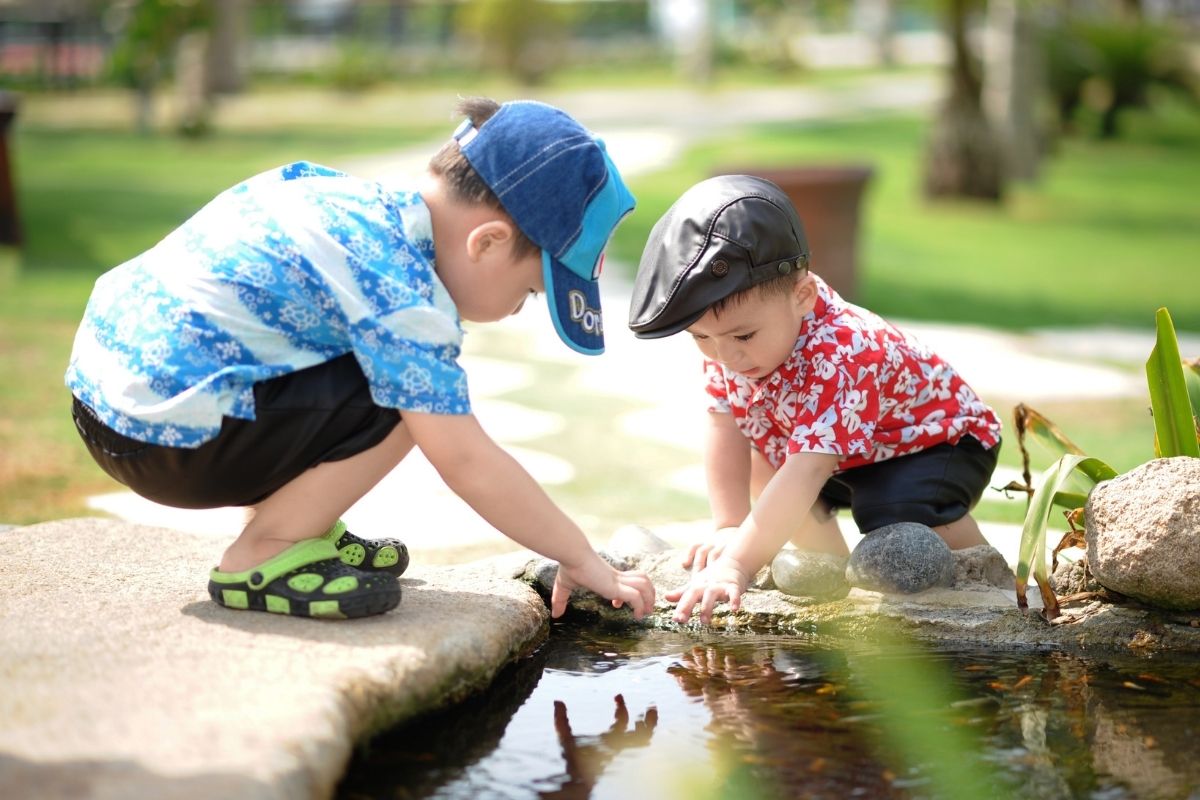
Children are natural noticers, as anyone who has walked with a young child knows. They see the tiny bug on the sidewalk, the sparkle in a puddle, the swirl in their paint. Adults often rush past those same moments — but when we pause and notice alongside a child, we model what gratitude looks like in action. The next time a child calls your attention to something small — a cloud, a sound, a color — take a moment to join in their wonder. A simple response like, “Wow, I hadn’t noticed that before — thank you for showing me!” validates their curiosity and demonstrates your appreciation. In that moment, gratitude becomes something they can feel and see, it becomes a part of their own noticing system.
Gratitude begins when we slow down long enough to notice what’s good, true, and beautiful right in front of us.
Gratitude Grows When We Give Joy
Play offers endless opportunities for giving — not just things, but joy, attention, and care. When a teacher kneels beside a child and listens to their story, when a parent laughs at a silly game, when a friend shares a toy or a turn — these are moments of giving. Children learn through imitation—we see that from the first connected “conversation” with an infant. As they grow older, they see adults give freely — time, kindness, patience, laughter — they begin to understand that joy grows when it’s shared. Gratitude isn’t forced; it flows naturally from relationships where generosity and connection are practiced daily.
Try this: during a playful moment, name aloud the joy you feel in giving. “I love sharing this time with you,” or “That made me smile!” Those simple words connect the act of giving with the feeling of gratitude, helping children make the link between joy and thankfulness.
Gratitude Connects Communities
Whether in a family, a classroom, or a community of play advocates, gratitude creates belonging. When we make a habit of acknowledging one another — thanking a co-teacher for their support, celebrating a child’s idea, or appreciating a parent’s partnership — we strengthen the bonds that make our work meaningful. Play can be a beautiful space for community gratitude. Consider starting a “gratitude circle” at the end of group play, where each person shares one thing they appreciated about their time together. Or begin staff meetings or family gatherings with a moment of thankfulness. These small rituals remind everyone that their contributions matter and that joy is often multiplied when it’s shared.
Gratitude as a Way of Living and Leading
For those who lead and teach young children, gratitude is both grounding and guiding. It invites us to see beyond the daily challenges and remember why our work matters. It’s the pause that helps us find perspective and the practice that helps us stay joyful. When gratitude becomes part of our daily rhythm — in our classrooms, our homes, and our hearts — it shapes the way we see the world. And children, ever-watchful, learn from that way of seeing. They come to understand that life is full of gifts, both big and small, waiting to be noticed, shared, and celebrated. Gratitude isn’t a lesson to deliver; it’s a life to model. Through playful connection, shared joy, and mindful presence, we can help children — and ourselves — grow grateful hearts.
Closing Thought:
In every block tower built, every giggle shared, and every story told, there’s an opportunity to practice gratitude. It’s not about adding more to our to-do lists — it’s about noticing the good that’s already there and letting that noticing change us.