I was a little girl who loved dolls…but in the 1950’s that was not unusual. I clearly remember my first dolls and indeed still have several of them. My very favorite was a gift for my sixth Christmas…she was a “Gerber baby”, modeled after the face on Gerber baby food jars. Her name was Judy Ann. My grandmother made her clothes, including a long white christening gown with a slip underneath. I loved her so much!
Another special doll in my life was my mother’s baby doll, Mary Ann. Mary Ann had a ceramic face, hands and feet and a soft body. My mother’s mother had her updated with fresh paint and new clothing for me when I was almost 12…yes, still played with dolls at that point! (Barbie was not marketed until after my 12th birthday!) She also had a white christening gown with tiny tucks down the front and embroidery on the collar, a lace cap and pink satin booties tied with ribbon. Such sweet memories…
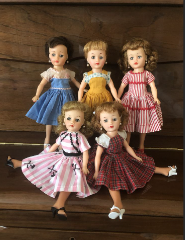
In the world of children, play is the universal language through which children learn, discover, and develop essential skills. Among the tools available to children, dolls stand out as versatile and invaluable companions for fostering imagination, empathy, communication, and cognitive growth. Let’s explore the benefits of dolls in the early years. We will take a look at the various cognitive, social, and emotional benefits that children receive from playing with dolls and the extent to which these simple toys can impact children’s development in all areas.
Understanding Play as a Learning Opportunity
Of course, before we begin to talk about dolls, it is important to ground our discussion on the significance of play in early childhood. Play is not merely a way for children to pass the time. It is a critical process through which they explore and understand the world around them. Play is the medium through which children develop vital skills such as problem-solving, creativity, and social competence. It lays the foundation for future academic success by enhancing cognitive, physical, and emotional development.
In the preschool years, when play is the order of the day, dolls can take center stage to offer children an array of benefits that go far beyond mere entertainment.
The Power of Doll Play
Encouraging Imagination and Creativity
Doll play encourages children to let their imaginations go wherever they wish. Whether they’re caring for a baby doll, engaging in role-play scenarios, or creating fantastical narratives, children are actively exercising their creativity. Through these imaginative journeys, they develop the ability to think outside the box and come up with novel solutions to challenges they may encounter in their play.
Fostering Emotional Intelligence and Empathy
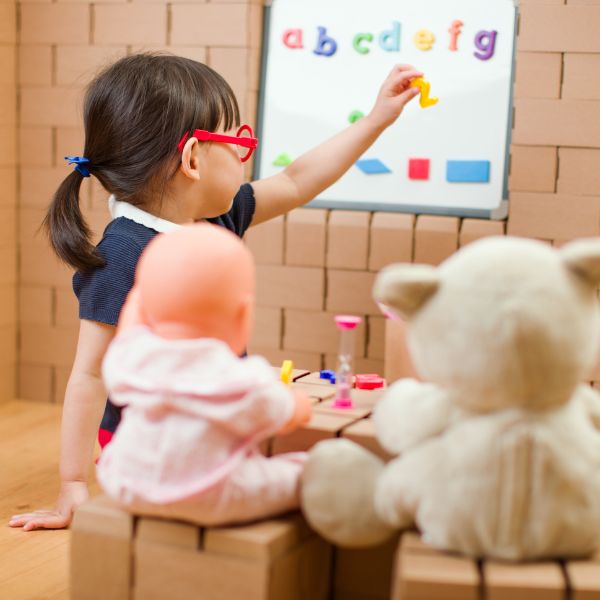
Dolls serve as miniaturized mirrors of their social experience, enabling children to connect with and understand the emotions and needs of others. When preschoolers play with dolls, they assume the roles of caregivers and companions, which cultivates empathy and compassion. They learn to recognize and respond to emotions, developing social skills that will serve them throughout their lives.
Enhancing Communication Skills
Doll play provides an ideal platform for improving communication skills. Children learn to express themselves and engage in dialogue as they interact with their dolls and peers. They build vocabulary, practice speaking and listening, and increase their ability to convey their thoughts and feelings effectively.
Promoting Physical and Cognitive Development
Cognitive development is a core component of early childhood education. Doll play enhances cognitive skills in several ways. When children dress their dolls, they develop fine motor skills and hand-eye coordination. As they organize their dolls’ belongings or create scenarios, they learn to sequence events and use logical thinking to solve problems. This playful experimentation with cause and effect lays the groundwork for future academic achievements.
Supporting Self-Regulation
As children care for dolls, hopefully, a rocking chair is included. Rocking has been shown to release endorphins which help regulate the brain state. Science also tells us that mammalian brains are wired to respond to being rocked. Together these can assist as a child seeks to regulate their own emotions. Rocking also contributes to feelings of security and calm. As we consider children who may have self-regulation issues, rocking a doll could be the simplest and most beneficial solution.
Building Social Skills and Cooperation
Preschool classrooms, playgroups and homes with siblings are environments where children learn how to cooperate and interact with their peers. Doll play encourages sharing, negotiation, and cooperation. Children often engage in collaborative doll play, cooperating to create stories, scenarios, and shared worlds. This teamwork reinforces social skills and fosters a sense of belonging and community.
Exploring Gender Roles and Diversity
Dolls provide an opportunity to explore gender roles, diversity, and cultural awareness. It is important that all children see themselves reflected in the dolls in a classroom. Even though a child may not choose to play with a doll of their own ethnicity, the fact that they are represented in the classroom is valuable. Children can choose dolls that represent a wide range of ethnicities, abilities, and professions. This allows them to explore differences and similarities, nurturing a sense of inclusivity and respect for diversity from a young age.
“The idea of boys playing with dolls can be challenging for some parents and others who see it as a “girl’s activity.”
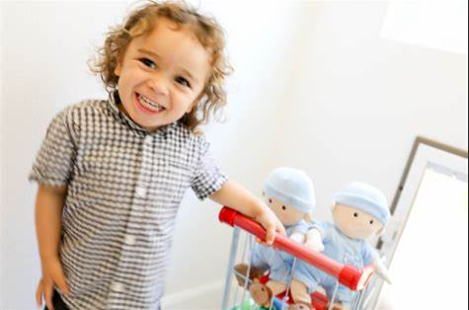
The idea of boys playing with dolls can be challenging for some parents and others who see it as a “girl’s activity”. However, for those little boys who have a new baby at home or who have seen a baby or younger child recently in another setting, living out their experience is an important option. In addition, there are many roles that males play in the lives of babies and young children, whether familial or otherwise. Acting as a pediatrician, a police officer, an uncle or a brother are a few of the basic roles that a boy can interact with dolls and peers. It is important for preschools to help parents feel comfortable with the choice to play with dolls and to communicate the impact that this opportunity can have in a child’s life.
Practical Applications of Doll Play in Preschool Classrooms
We have covered numerous benefits of doll play in the early years, so now let’s explore some ways to encourage play with dolls into a child’s day.
Doll-Centered Storytelling: Dolls can be characters in storytelling activities, encouraging children to create their narratives and engage in oral storytelling. This not only boosts creativity but also sharpens language and comprehension skills.
Doll Hospitals and Clinics: Establishing a doll hospital or clinic can be a fantastic way to teach empathy and problem-solving. Children can care for and diagnose their “patients,” fostering a sense of responsibility and compassion.
Doll Dress-Up Corner: A dress-up corner featuring a variety of doll clothes and accessories offers children opportunities for fine motor skill development, creativity, and self-expression as they dress and accessorize their dolls. In a classroom, this is also a location where special equipment to support disabilities can be stored to be used with good explanations by the teacher along with creative support.
Cultural Exploration: Having dolls that represent various cultures can spark conversations about diversity and inclusion. These dolls can serve as conversation starters and provide a foundation for discussing different customs, traditions, and celebrations.
Doll Play in Conflict Resolution: Encourage children to use dolls to act out conflicts and resolutions. This role-playing enables them to develop conflict-resolution skills and strategies for dealing with challenging social situations. By supporting them in their language use they will understand how words can impact a positive solution to challenges.
Collaborative Doll Play: Group activities that involve multiple children working together with dolls can develop teamwork and cooperative play skills. For example, children can build doll houses, create neighborhoods, or put on puppet shows using dolls as characters.
“Dolls aren’t just toys.”
Dolls are important for learning and development in the preschool years and beyond if that is a child choice. They allow children to explore skills from imaginative thinking and emotional intelligence to communication and cognitive growth. As educators and parents, when we recognize the value of dolls we open up a world of possibilities for creativity and learning.
Dolls aren’t just toys; they are opportunities to develop the full potential of our youngest learners. By embracing the power of doll play, we offer our children a journey of exploration, empathy, and creativity, setting them on the path to be parents, family members, teachers and anything they want to be.