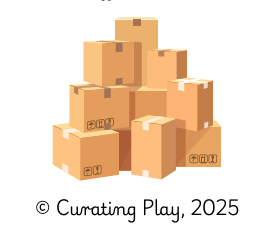
We have all heard the statement—often around a holiday—that children enjoy the box more than the gift inside. But actually, who doesn’t love to open the front door to find a delivery person or maybe just a brown box sitting on their welcome mat…especially if you are NOT expecting it? The size makes you start guessing, the calendar or the return address may give you clues…but sometimes you just don’t know what’s inside until you open it.
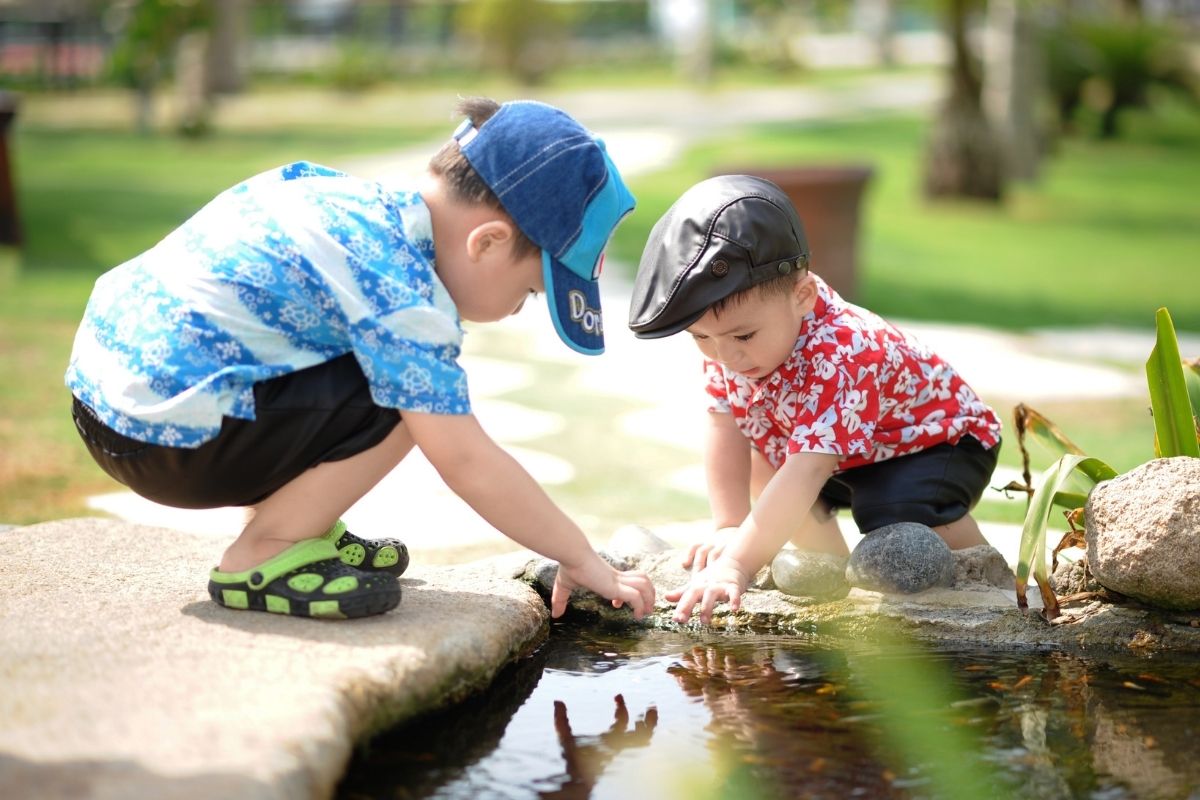
I think children’s imaginations are sort of the same way…we don’t know what is inside until we hear from them or see their play. We can so easily be surprised and delighted if we are willing to step back and allow that agency and independence to roll out of the play spaces of our environment. A simple and very inexpensive way to provide those experiences is to provide boxes—any and all kinds—as play tools.
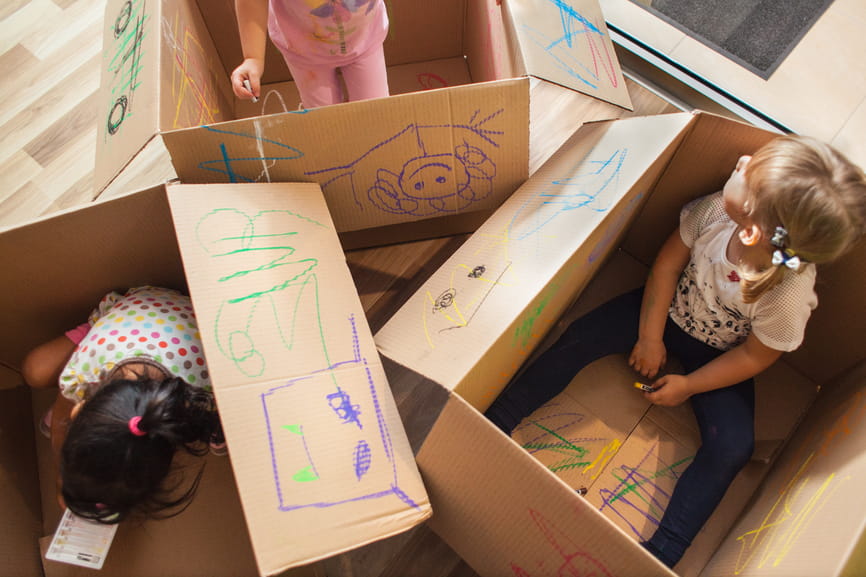
As facilitators of our children’s play, we can provide materials as invitations or as requested. Paper of all kinds along with markers or crayons for signs, labels, or decoration; various kinds and colors of tape for connection or rebuilding; props to go along with storylines when requested; comfort items like pillows, towels, books, animals, puppets for some down time; even adult hands to use scissors or knives to cut holes, doors, crenellations.
The hardest thing to remember is this is their discovery, their story and their creation. Being present on the fringes will give confidence and support when needed; being the provider of items requested gives a sense of trust and perhaps sharing; being available when called to celebrate, notice and appreciate gives a sense of partnership.
Boxes can provide a partnership opportunity for families as well. Requesting families to save all kinds of boxes—big and small—is an easy way to collect a variety if you have storage space (always an issue in an early childhood setting!). Since stores so often break down their boxes right in the aisle as soon as they are empty, appropriate timing and/or connections are important to use retailers as a source. Getting flattened boxes does provide a different experience, however, as your young builders might enjoy figuring out how to create a box from flat pieces of cardboard—especially if they have access to lots of colors of masking or painters’ tape!
While one idea might be to divide boxes into different learning areas in the classroom, another might be to have a “Box Zone” so that children’s ideas can determine where the boxes are needed to support their play. One might bring a small Jello box to art center to create a bird, another might need the same box as a decoration for the car being constructed with wooden blocks; still another might need to trace it to have a square for his math game. Allowing that sense of independence and creativity to develop is a great foundation for life skills as children grow.
Ultimately, boxes are more than just packaging—they are the tools that children can use for unlimited ideas and adventures. In fact, the Strong National Museum of Play in Rochester, New York, inducted the cardboard box into the National Toy Hall of Fame as the first toy of imagination in 2006. And this was before the rise of Amazon, Prime delivery and heavily advertised big box stores! We have so many options to use and explore with boxes these days…and boxes are great for indoor and outdoor play. Check out our quick list of ideas that can be used by teachers or provided for parents to support play at home.